Music Career Finder
Start Here:
Record Producer
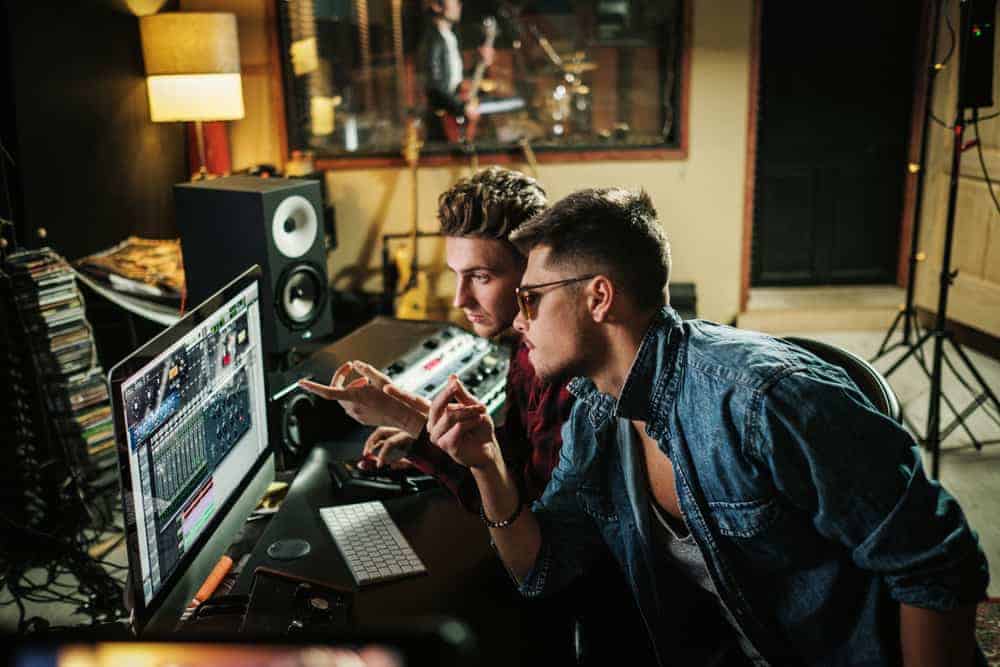
How To Become a Record Producer
- Record producers oversee the creative and technical aspects of recording a song, EP, album, or soundtrack
- You must know the technical aspects of recording and probably audio engineering
- You should be able to play an instrument and/or have a basic understanding of music theory
- The best way to start this career is to record your own music and record others’ songs for free
- The average annual income for a successful record producer is about $80,750 but it can range from $89,000 to $166,000
- Career Description
- Salary
- Career Outlook
- Career Path
- Experience & Skills
- Education & Training
- How to Get Started
- Additional Resources
- Sources
Career Description
Record producers, also called music producers, oversee both the creative and technical elements of recordings (single song, EP, album, soundtrack, etc).
What Does a Record Producer Do?
Here are the main responsibilities of a record producer:
- Schedule recording sessions with artists and musicians
- Hire and coordinate session musicians
- Help the client decide what to spend the budget on
- Song arrangement and songwriting
- Play instruments on the recording
- Audio engineering if no engineer is present
- Guide musicians and singers to their most impactful performances
- Editing, mixing, and mastering the audio
A Day In the Life of a Record Producer
Grammy-winning Producer Sylvia Massy talks about producing System of a Down, Slayer, and more…
It’s common for record producers to work long hours in the studio because, as production duo Arkatech Beatz (Nas, Freddie Gibbs, Raekwon) said, the record producer “is hands-on in the entire process of song creation.”
A record producer may work 10-15 hours per day, and is typically in the studio for as long as the client (artist) has booked them. They’re the co-captain of the recording session along with the artist, so they need to be just as invested as the artist.
You need to be ready to work long hours to get the job done, as engineer and record producer Gordon Raphael learned when he worked with The Strokes.
They hired him to record three of their songs over three days. And right at the point when he was “dying to go home, dying to sleep,” lead singer Julian Casablancas asked him to turn his vocals up one-tenth of a decibel.
Even though he didn’t think it would make a difference, that small change made the song sound better.
“I learned not to second-guess people,” Raphael told us. “And if they have an idea, no matter how tired I am, try their idea and don’t just dismiss it because I think I know better.”
Try every idea. Sort through the keepers and throwaways afterward.
Salary
The average annual income for a record producer is $80,750, but it can range from $89,000 to $166,0001.
How a Record Producer Gets Paid
The two main ways a record producer earns money are from upfront fees and backend royalties.
Producer Elaine Martone (Ray Brown, Oscar Peterson, Cleveland Orchestra) said she charges $5,000-$7,500 for a 60-minute recording, depending on the project.
“Of course, all fees are negotiable based on the needs of the client and whether I want to do something or not,” she said.
For example, Moseley’s per-project rate to mix a simple singer-songwriter track with very few instruments will be much less than recording a full band with hundreds of tracks.
“It used to be a set rate,” he said. “Now it’s much more fluid.”
Collecting Royalties as a Record Producer
You can ask for a percentage of the publishing rights, which would earn you performance and mechanical royalties. You can also ask for a cut of the streaming revenue paid by the digital distributor.
If you do ask for royalties, it’s common to get 3-4% of a song’s total revenue.
But many producers don’t ask for any royalties, which means they can charge a higher upfront fee.
To collect these royalties, you need to be registered with a Performance Rights Organization for performance royalties and a publishing admin company (which should partner with the Mechanical Licensing Collective) for mechanical royalties).
The Potential Salary of Successful Record Producers
Some producers become household names and earn huge sums, while others toil in relative obscurity and work only with unknown independent artists.
The more accomplished and well-known producers can make a lot of money, while many others work hard and are paid a decent living wage but perhaps not much more.
The level of a producer’s pay is closely linked to their experience, accomplishments, reputation, referrals, and skills.
Hey, what do you think about trying our new Music Career HelperMusic Career Helper really quick? It’s totally free and could help get your career moving fast! Give it a try. It’s totally free and you have nothing to lose.
Career Outlook
Being a full-time record producer can be a rewarding and sustainable career.
You won’t go from a $0 income to a livable wage overnight, but you can build a career over time.
Producer Matt Lawrence (Adele, Amy Winehouse, Mumford & Sons) said being a career producer is “amazing!”
“You get to make records for a living and then go home anonymously at the end of the session,” he said.
A-list producers love good music, have a passion for listening, and can bring a compelling vision of what’s right for a song and artist.
As a record producer, you can confidently charge a fair price for your services if you stay true to the art and have the training and skills to consistently deliver high-quality recordings.
Building a strong reputation is key.
A producer can prepare for major success in the music industry by constantly learning and improving their skills, while paying attention to what’s trending in music and music production.
It’s a highly competitive industry, but people will always recognize and reward talent and ability.
Being a Record Producer in an Era of Artificial Intelligence
Artificial intelligence has advanced to the point where it can now compose music on its own with just a simple prompt from a human.
Does this mean AI will replace human record producers?
Not quite. If we use AI correctly, it could actually serve as a valuable tool for producers rather than a replacement.
Jason LaRocca, a Grammy-nominated engineer, mixer, and producer, believes AI can assist in music creation, but humans will always remain in control.
“I think you could maybe use AI ultimately on a creative level for certain inspiration, maybe,” he said. “But I think you have to ultimately…still write music. You still have to make music, and it has to be something you make.”
As a record producer, your value lies in your creativity and vision. Focus on pushing the boundaries of your craft, and create music that is so unique and genuine that no machine could replicate it.
Raphael said he’s “fascinated by human music,” much more so than AI music.
“…The thing about music that kills me is hearing an experience and a story turned into music,” he said.
“…It’s nothing to do with the technical chord structure or the production sounds — the things that AI can get. AI would have to convince me that it had a little struggle that no one else had, and it wants to tell me about this in a very clever way.”
Career Path
Is it hard to become a record producer? It can be, but it will be much easier if you love it.
“It’s not hard to become a Producer if you have a passion for it,” said Arkatech Beatz. “Like any craft, one has to be consistent in developing.”
There isn’t one way to become a record producer, but here are some different ways to get started…
Start as a Musician
You can begin your career as a record producer by writing, recording, and releasing your own music. This gets your name out there and shows other artists what you can do in the studio, which can lead to them hiring you for their projects.
Get Into Audio Engineering
The skills of an audio engineer overlap a lot with those of a producer. So set up a home recording studio and start offering your audio engineering services, which will give you the opportunity to contribute to the production.
Collaborate With Others
People won’t hire you as a record producer until they see what you can do. And one of the best ways to show what you can do is to collaborate. Try writing and producing a song with someone else. If you’re good, they may hire you for a future project, or tell their artist friends about your production skills.
Go To Music School
Music school can teach you all of the technical skills you’ll need as a record producer. It also is a chance to meet other musical people and network. If you can afford it, music production school could be worth it.
Experience & Skills
Here are the skills you’ll need as a record producer:
- Playing an instrument
- Songwriting
- Audio engineering
- Song arrangement
- Time management
- People skills
- Music business knowledge
Now, of course there are outliers. Rick Rubin famously doesn’t know how to play an instrument or do audio engineering. But almost every other successful producer has the below set of skills to varying degrees of proficiency.
Playing an instrument
Being able to play piano or guitar as a record producer means you can help the artist find melodies and harmonies, and be able to come up with musical ideas you can clearly convey.
Also, it makes you more valuable if you can play a guitar or piano part instead of finding, hiring, and scheduling a session musician.
Songwriting
Sometimes, the artist may want to change a lyric, melody, or chord progression. If you have experience writing songs, you can help them guide the song to its strongest form.
Audio engineering
Many record producers start as audio engineers. Running a recording session, setting up microphones, and working at the mixing console is a great way to familiarize yourself with the recording environment.
This involves knowing your way around a digital audio workstation (so check out our picks for the best music production software for beginners).
Record producers who know how to add effects to a track, add layers of instruments, overdub solos, create a rough mix, and know their way around the gear are valuable — more valuable than producers who don’t know those things.
Song arrangement and orchestration
You don’t need to know how to read or write music to be a record producer, but those skills can definitely come in handy. If the artist wants a full orchestra or even just a quartet in their song, it would be ideal if you, the producer, could write and arrange the players’ parts.
Time management
You will probably be paid per project, so managing your time is in your best interest. Also, the artist doesn’t want to feel like they’re wasting time, and they want their project completed in a timely manner. So you have to learn how to work on a schedule and optimize your time.
People skills
Producers need solid people skills. Leading teams requires “soft skills” to communicate the vision for the project, manage personalities and egos, motivate the players to deliver their very best work, keep things on track, and find ways to compromise.
“Really listening to what people want,” said Lawrence. “Exuding a sense of confidence in what you are all doing when some start to doubt the direction.”
There are some cases where well-known producers were fired in the middle of a project because they didn’t “click” with the artist. It may have been that the musical visions were not compatible, but it was likely also a clash in personalities.
Moseley said the technical skills are easy to learn. It’s the people skills that will set you apart.
“Anyone can learn the software; it’s essential,” he said. “But it’s who you are and your ability to read people and to interact with people.”
Music business knowledge
As a record producer, you will be sending and signing agreements, so you need to be familiar with the laws surrounding recorded music and who should own what.
It’s not enough to have the artistic and technical skills of a producer. You also need to become business-minded.
Education & Training
Becoming a record producer doesn’t require a one-size-fits-all education. You can choose to go to a music school or learn on your own.
Record Producer Degree
If you do choose to further your education through a 4-year music program, there are plenty of music schools to choose from.
The best type of degree to get would be Music Production or Audio Engineering. These programs will teach you the technical skills and knowledge you’ll need to get started.
Alternatively, you could earn a certificate in music production or audio engineering.
Ultimately, it’s not the degree or certificate that will make or break your career. But it can be a leg up over the competition.
Self-taught
On the other hand, if you want to know how to become a music producer without a degree, it comes down to getting in there and doing the work.
Arkatech Beatz said certificates or degrees are not necessary for succeeding as a record producer.
“These days you really don’t need any major qualifications to be a Producer,” they said. “However, just being an average Producer versus being a great Producer will depend on one’s creativity, drive, and ability to think out of the box.”
Moseley seconds that worldview.
“If you can’t afford to go to a school, teach yourself,” he said. “There are so many clips on YouTube.”
You can also learn by shadowing or interning with a more established record producer or audio engineer.

How to Get Started
Ready to kickstart your journey as a Record Producer? Below is a step-by-step path to take you from zero experience to landing your first paid gigs in your local music scene. Follow these steps, stay persistent, and have some fun along the way!
- Set Up a Basic Home Studio. Don’t worry – you don’t need a fancy recording studio on day one. What you do need are the basics: a computer, some music production software (a Digital Audio Workstation, or DAW), and a decent pair of headphones or speakers so you can actually hear your work clearly. If you plan to record vocals or instruments, an inexpensive audio interface and mic will come in handy, but keep it simple at the start. Plenty of hit-making Producers began in their bedrooms with just a laptop and headphones. It’s not about how expensive your gear is; your strength lies in the time you put into creating music, not the money you spend on equipment. Every great studio upgrade can come later – for now, just get your setup ready to make some noise!
- Start Creating Your Own Tracks. The best way to learn is by doing, so dive in and start making music right away. Fire up your DAW and experiment: lay down a drum beat, play a few chords, or record yourself singing (even if it’s into your laptop mic). If you play an instrument, try writing and recording an original song or a cover to practice the production process. No instrument? No problem – you can use virtual instruments, loops, or sample packs to build a track. Don’t stress if your early tracks sound rough or nothing like the pros; every Producer has to start somewhere. In fact, finish those rough tracks even if they’re not perfect – completing songs will teach you more than a dozen half-finished ideas will. Mistakes and “bad” mixes are all part of learning, so embrace them.
You make your mistakes to learn how to get to the good stuff. – Quincy Jones
- Learn the Fundamentals of Music and Production. While you’re busy creating, spend time learning the basics that will make your productions better. This means some music theory (at least understanding song structure, rhythm, and chord progressions) so you can communicate with musicians and craft songs that resonate. It also means learning your tools inside out: get comfortable with your DAW’s features, shortcuts, and plugins. Fortunately, there are endless resources to help you – from YouTube tutorials and beginner online courses to books and blogs on music production. Train your ears by listening actively to lots of music in different genres: ask yourself how your favorite songs are arranged, what each instrument is doing, and how the mix sounds so polished. The more you understand concepts like EQ, compression, and song arrangement, the more control you’ll have over your sound. Think of it as learning the “rules” so you can one day creatively bend them. A solid foundation in the fundamentals will make every step that follows much easier.
- Practice Recording and Mixing Regularly. Producing isn’t just about making beats in isolation – you should also get comfortable recording sounds and mixing tracks to polish them. Set aside time to practice recording anything you can: capture your friend’s guitar riff, record a vocal snippet, or even sample sounds around your house and see how you can incorporate them. As a budding Producer, you’ll often be acting as your own Audio Engineer, so learn how to place microphones, adjust recording levels, and use your software to layer tracks. Then dive into mixing: play with EQ to carve out space for each instrument, experiment with reverb and delay to add depth, and try your hand at basic mastering tools. Your first mixes might not sound radio-ready (or anywhere close), but each one will get better. There are tons of free tutorials that can teach you specific techniques – use them to troubleshoot problems you encounter (“Why does my mix sound muddy?”) and to pick up new skills. Treat every song you work on as a chance to improve your ear. Over time, you’ll start hearing the difference between a sloppy demo and a clean, punchy mix – and you’ll know how to get there. Consistent practice is what turns bedroom Producers into seasoned pros.
- Collaborate with Other Musicians. Music is often a team sport, and collaborating with others will accelerate your growth (and it’s a lot of fun). So, look around for people to make music with. If you have friends who sing, rap, or play instruments, offer to produce a track for them or record them. If you don’t know any musicians yet, try connecting online or in your community – there are always singers looking for beats, rappers needing backing tracks, bands wanting to record a demo, etc. When you collaborate, you learn to adapt to different styles and ideas, which is exactly what a Record Producer does. Plus, each collaboration creates a finished song that you can proudly point to as part of your portfolio (more on that next). Working with others also gets your name out there: if you do a great job producing someone’s song, they’re likely to recommend you to their friends or invite you to work on future projects. Networking happens naturally when you collaborate. To expand your network further, attend local shows, open mics, or music meet-ups and introduce yourself as a Producer looking to work with artists. Join online communities of producers and musicians (there are plenty of forums, social media groups, and Discord servers where people link up to make music). The key is to build genuine relationships – people will remember the Producer who was enthusiastic, easy to work with, and made the process enjoyable. Those relationships can lead to your first opportunities.
- Build a Portfolio of Your Work. As you start finishing songs (whether they’re your own or collaborations), compile your best work into a portfolio. Think of this like your musical resume – it shows people what you’re capable of producing. Your portfolio could be as simple as a playlist on SoundCloud or a few tracks uploaded to YouTube or a personal website. The format doesn’t matter as much as the content. Aim for a handful of tracks that really represent your style and skills. If you dabble in multiple genres, you can include a variety to show your range; if you’re focused on one genre, showcase your very best in that area. Make sure to highlight what you did on each track (e.g., did you handle the recording, the beat, the mixing?). A slick instrumental or a well-produced song with a local artist can speak volumes to potential clients about what you can deliver. When someone asks “What have you produced?”, you’ll be ready to let them hear it. Finally, don’t be shy about sharing your work – post your tracks on social media, get feedback from other producers, and keep refining your catalog. A strong portfolio builds credibility and helps you stand out when you start looking for gigs.
- Consider Music School or Courses (Pros & Cons). At this point, you might be wondering if you should get formal training to boost your career. Going to a music production school, enrolling in an audio engineering program, or even taking a few courses can definitely level up your technical knowledge and expand your network. In a structured program, you’ll learn from experienced instructors, get hands-on time with professional gear, and potentially meet collaborators or mentors among your classmates and faculty. A degree or certificate can also look good to some clients or employers (and your parents might like it, too!). However – and this is a big however – formal education is not a requirement to become a successful Record Producer. Many well-known producers never earned a degree in music; they learned by doing (just like you’ve been doing in the steps above). Music school can be expensive, and not everyone has the time or money for it. The good news is that in today’s world, you can teach yourself almost everything online if you’re motivated. There are countless YouTube channels, online classes, and communities where you can learn every aspect of producing from songwriting to mixing to music business. Whether you choose the college route or the self-taught route, what really matters is your skills and creativity. As one producer wisely noted, talent and hustle carry more weight than a fancy diploma in this field.
These days you really don’t need any major qualifications to be a Producer. Being a great Producer versus an average one depends on your creativity, drive, and ability to think outside the box. – Arkatech Beatz
If you do go to school, great – soak up all the knowledge and connections you can. If you don’t, rest assured you’re not at a disadvantage as long as you stay hungry to learn. (And if you can’t afford a full program, consider shorter workshops or certificate courses as a compromise.)
- Seek Mentors and Internship Opportunities. One of the best ways to learn the ropes and get your foot in the door is to work with someone who’s already doing it. Try to find a mentor or an internship in the recording industry. This could mean interning at a local recording studio, assisting a busy Producer or audio engineer, or even volunteering to help out at music events. Yes, this might involve doing grunt work at first (making coffee runs, wrapping cables, or scheduling sessions), but being in the room where the action happens is invaluable. You’ll pick up insider knowledge that no YouTube video can truly teach – how to handle artists in a session, how to troubleshoot a sudden technical issue, how producers make creative decisions on the fly, and the general flow of professional projects. To land these opportunities, don’t be afraid to reach out. Send polite emails to studios or producers in your area, introducing yourself and expressing your eagerness to learn. Be persistent (without being pushy) and be willing to start small. Sometimes, just hanging around a studio (with permission, of course) and being helpful can lead to bigger roles. When you do get a chance to assist, show up on time, have a great attitude, and ask questions at the right moments – basically, absorb everything. Many top producers started exactly this way, learning as apprentices. A great mentor will open your eyes to new techniques and also introduce you to people in the industry. And even if the first studio you approach isn’t taking interns, they might remember you for the future or refer you to someone else. The music world is surprisingly small and relationships are key. Show people you’re passionate, reliable, and easy to work with. That reputation can become your springboard to paying gigs.
- Land Your First Local Gigs. Now it’s time to turn all your skills and preparation into actual, paying projects. Early on, your “gigs” might be small – and that’s perfectly fine. Look for opportunities in your local music community. Is there a band in your town that needs their EP produced or recorded? A singer-songwriter who could use help arranging and mixing a song? Maybe a rapper who needs better beats or someone to record their vocals properly? Offer your services. You might start by producing a single track for a modest fee (or even for free just to build trust and a track record). The goal is to get real experience working with clients and to add those projects to your resume. When approaching potential clients, leverage your portfolio from Step 6: let them hear what you can do. This is where having those few good tracks really pays off. Also, be clear about what you’re offering – for example, “I can help you record and produce a professional-sounding demo of your song.” Local gigs often come through word of mouth, so use your network: let your musician friends, music teachers, or community know you’re available to produce music. You can even use social media to announce that you’re taking on projects (share a snippet of a track you made and say you’re excited to work with more artists). As you land a couple of small gigs, treat them like big gigs: be professional, meet your deadlines, communicate well with the artist, and make the best recording you can. Impress your first clients and they’ll spread the word. Soon enough, you’ll go from “aspiring” to the go-to Record Producer for local talent – and yes, you’ll be getting paid.
- Keep Learning and Evolving. The journey doesn’t stop at your first paid gig – in fact, that’s just the beginning. The most successful Record Producers are lifelong learners who constantly refine their craft. After each project, reflect on what you learned and what you could do better next time. Stay updated on new production techniques, music technology, and trends in the industry (for example, if there’s a hot new plugin or a popular new genre, be curious and check it out). Continue to hone your musical skills, whether it’s practicing an instrument, trying out new songwriting approaches, or experimenting with sound design. Also, maintain and grow your network: the artists you work with early in your career might refer you to bigger artists down the line, and fellow producers can share opportunities or advice. You’ll find that as your experience grows, your workflow will improve and your unique style as a Producer will emerge – lean into that! Perhaps most importantly, stay patient and persistent. Building a career in music takes time. You might see peers blowing up overnight on TikTok or getting lucky breaks, but remember that every “overnight success” usually has years of hard work behind it. If you keep pushing yourself to be better and you truly love what you’re doing, you’ll be able to ride out the tough moments. Celebrate the small victories (your first 100 streams, your first compliment from a client, your first song on the radio – however small it may seem) because those are the fuel to keep you going. In the end, being a Record Producer is all about passion meeting practice. Keep that spark alive, never stop learning, and keep saying “yes” to opportunities that come your way. Do that, and you’ll continue climbing from local gigs to bigger and bigger projects. Who knows – in a few years, a beginner might be coming to you for advice on how to get started!
Additional Resources
Adam Moseley is a big proponent of online self-education.
“All the information is out there on the Internet,” he said. “You can watch videos, documentaries, tutorials of how to use compressors, and great Producers and Engineers that are active. Pensado’s Place [and the associated Facebook group] is a fantastic resource and another great resource is Pro Audio Files. It has articles every single day on a specific topic.”
Aspiring Producers may also find the Audio Engineering Society and The Recording Academy (GRAMMYS) to be helpful learning resources.
“If it’s something that you want to do, you can find the information and teach yourself,” Moseley said.
“If you don’t understand how a compressor works, look it up. Write it down. If you want to see why a certain Engineer uses a certain compressor you can probably find a three or five-minute clip of them on why or how it works and you can educate yourself and your ear. Then try it with your plugins. The good ones are incredibly accurate so you can train your ear with a plugin.
“Put an instrument through compressors and just see how the sound of the instrument is different, see how each compressor changes the sound before it’s even compressing. Because each compressor has different components and electronics, a different character, reacts in a different way.
“Train your ear. You can do that at home. Put your bass track on and just open different plugins and see how they sound different. Read up to see what people use and used to use. It’s pretty easy to find the info.”
Sources
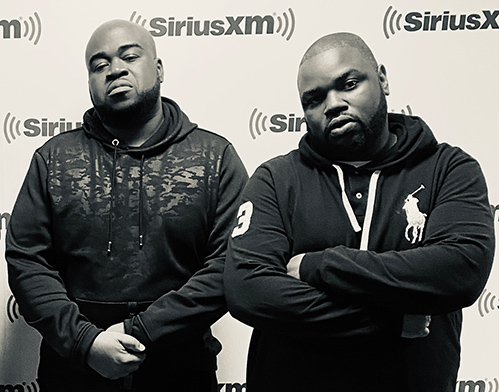
Arkatech Beatz
Quietly becoming one of the most consistent production teams in the business, Arkatech Beatz, (formerly known as The Infinite Arkatechz – Mike “Trauma” D & Jugrnaut), have produced records for some of the most successful and respected hip hop artists in the industry. With humble beginnings working as A&Rs at the legendary Loud Records/Sony BMG, Arkatech Beatz (hailing from New York) began their production ascent with Big Pun’s Grammy-nominated Capital Punishment (2X Platinum).
After the success of Capital Punishment Arkatech Beatz went on to produce records for Nas (My Worst Enemy) and on Big Pun’s sophomore release Leatherface. Arkatech Beatz then landed a production deal with Loud Records/Sony BMG and went on to produce for Terror Squad (Triple Threat), The Game (Never Be Friends), Wu-Tang’s Raekwon the Chef (Live From NY), Mobb Deep’s Prodigy (Self Conscience), Shady Records’ Obie Trice (What You Want), The American Cream Team/RZA (It’s Not A Game) & many others.
During this time Arkatech Beatz also worked as a Musical Supervisors for James Toback’s film Black & White, starring Elijah Wood, Robert Downey Jr., Brett Ratner, & Brooke Shields. In addition, Arkatech Beatz also coordinated artist development deals with Epic/Sony BMG & Fontana/Universal Music Group.
The duo has received coverage in The Fader, The Hype Magazine, Makin’ It, Voyage ATL, Digital Music News, and Hip-Hop DX.
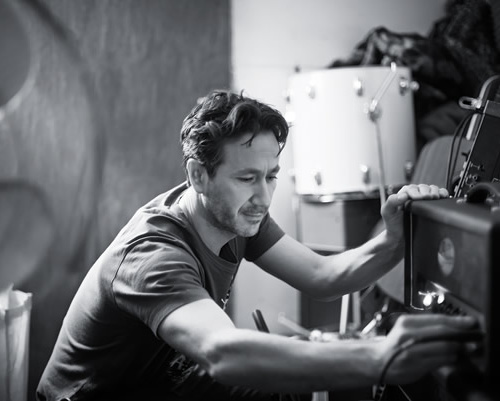
Matt Lawrence
Matt Lawrence is a Grammy-winning Producer, Engineer and Mixer who has worked with artists such as Adele, Bjork, Amy Winehouse, Mumford & Sons, U2, The Clash, The Rolling Stones, Elton John, Justin Timberlake, Ellie Goulding, and Lady Gaga. Lawrence is currently on the Pieces of 8 roster. He was shortlisted for a Music Producers’ Guild Award for Recording Engineer of the Year in 2011.
Lawrence has been profiled in Business Review, KMR Audio, and the Sonnox Plugins YouTube.
He is a FabFilter artist. His discography can be viewed via Discogs.
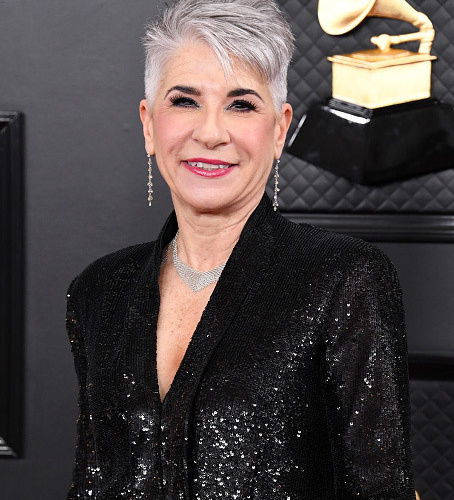
Elaine Martone
In her 29 years at Telarc as Executive Vice President of Production, Elaine Martone built the finest audio production team in the industry, garnering praise for excellence in all major audio publications.
Trained by industry icons and visionaries Robert Woods and Jack Renner, she led the Production Department of 12 highly motivated creative individuals who worked seamlessly to achieve the company’s goals and mission of audio excellence while adhering to the highest standards of integrity. She was responsible for post-production audio direction and approval for every Telarc release.
As a key executive in planning and creative decision making in weekly Artist and Repertoire meetings, she managed more than 1,500 projects on time and on budget, accountable for more than $6 million annually in production costs, and $15 million in sales.
As a world-class producer, she is a 5-time Grammy Award winner in both Classical and Jazz, an 11-time Grammy nominee, is a member of the Grammy Producers and Engineers Wing and is a Governor for the Chicago Chapter Board of the Recording Academy.
As head of Artist Relations, Elaine collaborated with artists and organizations on a daily basis to determine the concept and repertoire for each project using clear and concise written and verbal communications, to ensure a smooth recording process and the highest possible quality result for the artist.
Elaine began her career in 1980 when Telarc was in its infancy. Born in Rochester, New York and reared on Long Island, Elaine moved to Cleveland to study oboe with aspirations of playing with a symphony orchestra.
A graduate of Ithaca College with a Bachelor of Music degree, she was a novice to the recording business. Elaine quickly grasped what determined the Telarc sound, becoming an accomplished editor, and then recording producer and an integral part of the senior management team.
Elaine has served as producer on award-winning recordings of both classical and jazz, including those by the Atlanta Symphony Orchestra with Robert Spano, Donald Runnicles, Yoel Levi, and Robert Shaw, The Cleveland Orchestra with Franz Welser-Möst, the Philharmonia Orchestra with Benjamin Zander, Empire Brass Quintet, classical guitarist David Russell, and jazz greats Geri Allen, Ray Brown, Ann Hampton Callaway, Michel Camilo, Oscar Peterson, Tierney Sutton, and McCoy Tyner to name a few.
Elaine was Executive Producer for Spring for Music, an orchestral music festival produced at Carnegie Hall with founding directors Thomas W. Morris, David V. Foster and Mary Lou Falcone, music industry legends. The festival took place during one week each May from 2011 through 2014 at the iconic hall, with orchestras invited to perform based on their innovative programming.
She was Festival Producer for the world-renowned Ojai Music Festival, one of the most exciting and creative music festivals in the field, from 2012 to 2019 and was Lab Director for the innovative Blackbird Creative Lab from 2016-2018. She has served as a Visiting Artist at CalArts
From September 2009 through June 2010, Elaine was engaged as Interim Artistic Administrator for The Cleveland Orchestra. In that position, she managed all aspects of artistic planning and programming, collaborating with the Music Director, Executive Director and General Manager.
During those ten months, it was Elaine’s responsibility to help guide the artistic profile of the Orchestra, and to initiate, develop and maintain the Orchestra’s relationships with major conductors, composers, guest artists and managers.
Together with her husband, Robert Woods, Elaine has formed a music enterprise, Sonarc Music and is pursuing her passion, producing great music and musicians, as well as working with talented young people in a wide variety of musical styles.
Her leisure time is given to spending time with family, reading, cooking and gardening, competitive ballroom dancing, fitness and volunteer activities. She was a founding board member of Red {An Orchestra}, which completed seven seasons in Cleveland, Ohio. Elaine and Bob reside in Shaker Heights, Ohio.
Martone’s career has received coverage in NPR, Time magazine, Billboard, Los Angeles Times, ETonline.com, The Fader, Sound Girls, Cincinnati Business Courier, The Absolute Sound, Pro Sound Web, CAP Radio, Cincinatti.com, the Creative Careers podcast, MIX Online, Maestra and Janelle’s Notes.
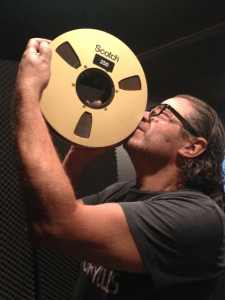
Adam Moseley
Record Producer, Recording Engineer and Mixer Adam Moseley began his career at the legendary Trident Studios in London. He moved to Los Angeles in 1996, eventually taking charge of the Dust Brothers’ Boat Studios in the Silver Lake neighborhood.
Over the course of his career he has worked with such luminaries as U2, Lenny Kravitz, Spike Jonze, Wolfmother, Nikka Costa, Roxette, Maxi Priest, Richard Marx, The Cure, Kiss, Visage, Rush, Beck, Baaba Maal, Branford Marsalis, Talvin Singh, Earth Wind and Fire, Hoagy Carmichael, Ben Harper and the Yeah Yeah Yeahs, to name just a few. He is an Ollo Audio artist. You can check out his discography via Discogs.
He teaches production through UCLA Extension, Garnish, Valencia Berklee, and Recording Connection. He has served as a presenter to the Audio Engineering Society.
He has been featured and mentioned in Mix Online, Sound on Sound, Medium, Atwood Magazine, the Vintage King blog, Barefoot Sound, and Fast and Wide.
You can get more of Adam on his episode of Pensado’s Place. For more video, check out his apperances on Barefoot Sound, RAWartist Media’s Music Industry Exchange, UCLA Alpert’s Music Beyond the Speakers, UCLA’s Les Paul’s Birthday Celebration, PMI Audio Group, Ultimate Studios, and Apogee Electronics.
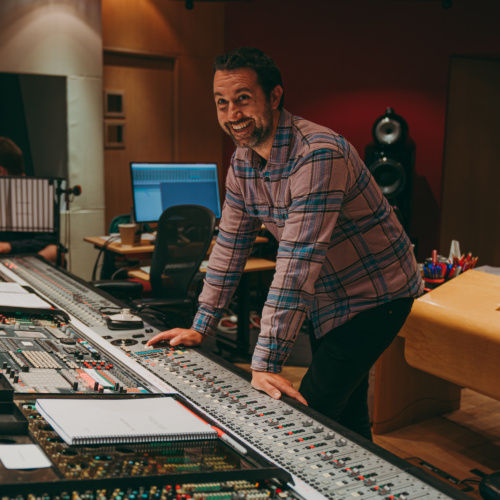
Jason LaRocca
Jason LaRocca, a Grammy-nominated engineer and mixer, is also known as the former singer/guitarist of the acclaimed punk band The Briggs. By the time he was eighteen, the Los Angeles native was already touring the world as a musician, while simultaneously establishing himself as a producer and recording engineer.
Jason’s extensive career spans both film and video game music. He has worked with major movie studios, recording and mixing music for blockbuster films like Bad Boys for Life, Paddington, Aquaman, The Flash, and the Oscar-winning documentary Icarus. His work in the gaming world includes mixing music for popular titles like Fortnite, God of War: Ragnarök, Call of Duty: Black Ops Cold War, Assassin’s Creed Valhalla, among others. True to his multifaceted approach, Jason often goes beyond engineering, producing scores and creating sound design and instrumentation for many of his projects.
In television, Jason’s expertise extends to score recording and mixing for a number of high-profile shows. His TV credits include The Lord of the Rings: The Rings of Power, Little Fires Everywhere, Justified: City Primeval, Fellow Travelers, Locke & Key, The Offer, Black Mirror, and Venom: the Last Dance.
Jason has also worked with top recording artists, including Jay-Z, CeeLo Green, Fiona Apple, ScHoolboy Q, and Serj Tankian of System of a Down, lending his engineering and mixing talents to some of the biggest names in music.
In 2023, Jason earned his first two Grammy nominations — one for his mixing work on the cast album of the hit Broadway musical Sweeney Todd: The Demon Barber of Fleet Street and another for Best Video Game Score for God of War: Ragnarök.
Photo credit: Kevin Matley
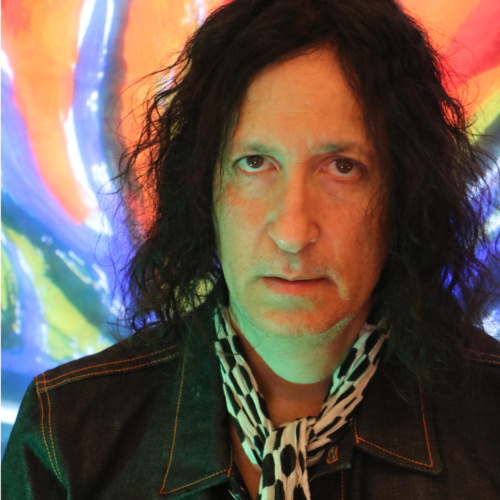
Gordon Raphael
Gordon Raphael, his mom and grandma Minnie knew that big things were possible when he won a Red Cross sponsored art contest at age six, whilst still in first grade in Pennsylvania. The awar winning painting which was sent around the world, featured a bird house with an entrance and exit, just like he had observed at his school.
At the age of 13, Gordon quit his traditional piano lessons to join his first (of 33 different) roc roll bands. Stepping onstage and performing at Jr High School dances at earsplitting volumes “sealed the deal” and for the rest of his life Gordon dedicated his time and energies to music; composing, performing, recording and producing during the last 5 decades.
With Sky Cries Mary during the Seattle grunge explosion, great signs of success and satisfaction appeared with several valuable recording contracts and a publishing deal in Beverly Hills (World Domination Records, Warner Bros Records and Windswept Pacific Publishing Toward the end of this great time for Seattle bands, he moved with his new band partner Ann Hadlock to New York City to continue his music career and gained a reputation in the East Village as a studio owner and producer-for-hire.
Playing locals shows with his group, Absinthee was very exciting— but when he discovered local NYC band, The Strokes and produced their first EP and subsequent two albums, things reall took off. Then came the good fortune to meet and produce Regina Spektor for her brilliant Sovie Kitsch album, which was eventually released by Seymour Stein (The Ramones, Madonna) on his SIRE Records label.
Gordon Raphael relocated to London then Berlin, and finally settled in West Yorkshire, UK in th pursuit of more and more interesting musical opportunities. By now Gordon has recorded 20 albums of his own music, produced over 200 bands, worldwide and as of 2022, became a author of a book titled, The World Is Going To Love This (Up From The Basement With The Strokes), via Wordville Press in London.
Believing that art and music are some of the most precious and worthwhile of all human activities, Gordon has championed young musicians and others drawn to creative callings. By nurturing the imagination, and protecting expressive tendencies towards originality and highly individualistic works, he has been cheerfully welcomed as a lecturer, speaker and music producer.